A route
Families meet along a planned path to school.
Bike bus basics
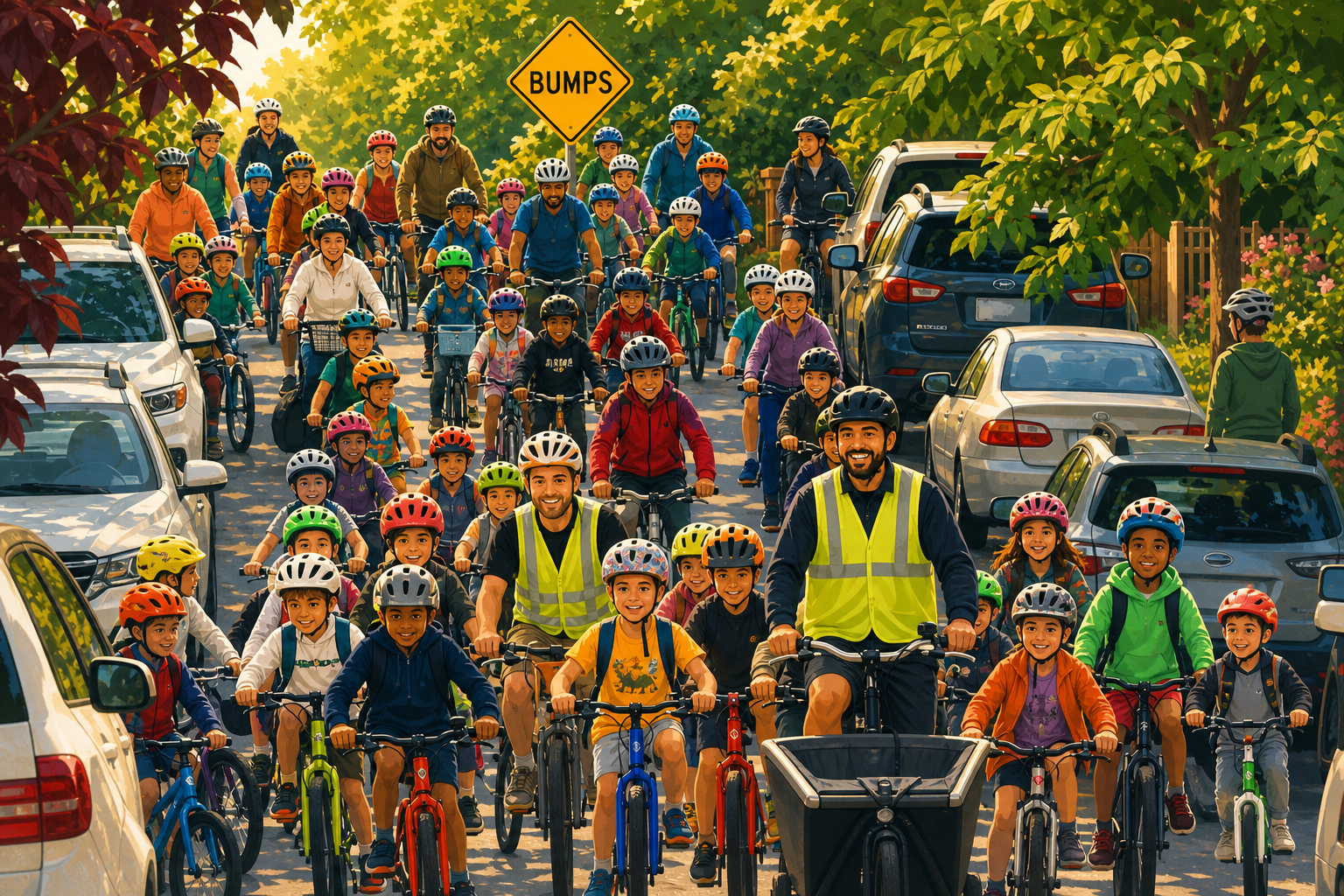
A bike bus is a safe and fun way for kids to get to school—a group of families riding together with adult leaders on routes carefully planned with safety in mind. Children travel as part of a visible club on wheels, building confidence, friendships, and healthy habits.
The simple version
Every club does it a little differently, but most bike buses have a few things in common.
Families meet along a planned path to school.
The ride leaves at a predictable time.
Kids ride with other families, not alone.
Organizers and volunteers help coordinate the ride.
How the ride works
Adult volunteers usually spread out through the group so families know who is setting the pace, helping at intersections, and making sure nobody is left behind.
The leader rides near the front, sets a steady pace, watches the route ahead, and gives the group clear cues for starting, slowing, stopping, and crossing.
An intersector helps the group through cross streets. They may cork traffic by standing in the intersection or positioning their bike at the entrance to a cross-street, often explaining the ride to waiting motorists and thanking them for their patience.
The sweeper rides at the back, keeps an eye on spacing, supports riders who need help, and confirms the whole group has cleared stops, turns, and intersections.
Why families try it
Bike buses are not the right fit for every household or route. For many families, the appeal is practical: kids move before school, neighbors meet each other, and the ride feels easier when people are not figuring it out alone.
Kids get movement before school.
Families meet neighbors.
Drop-off can feel less isolated.
Some short car trips around campus can be reduced.
Kids can build confidence riding with a group.
Background
Bike buses have grown through parent organizers, educators, Safe Routes advocates, and school-linked clubs.
Some run weekly, some monthly, and some on special walk/bike-to-school days. The idea has spread because it
is simple: families are more likely to ride when they can ride together.
BikeBus.club is inspired by the organizers already making this happen, including clubs documented by
BikeBus.World and local press around the country.
See it in motion
These three links are pulled from the curated video gallery. The full gallery keeps the rest of the clips in one place.
High-visibility social clips from Coach Balto, Bike Bus World, and collaborators.
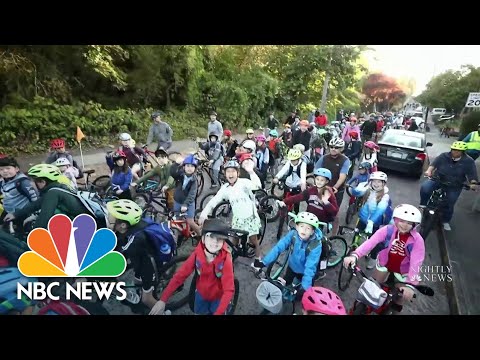
A clear mass-audience explainer with real ride footage.
A behind-the-scenes movement clip tied to the Portland bike bus story.
Bike bus articles
These recent links come from the existing BikeBus.club research workbook and show bike buses being covered by local, school, advocacy, and national outlets.
Guest article by Jessica Fletcher, organizer and leader of James John Elementary School Bike Bus.
Covers John Muir Elementary bike bus event for Bike and Roll to School Week.
School district page announces two bike buses to Bresnahan every Friday in spring.
Project page says bike buses returned in 2025 and expanded to more schools and routes.
Describes Nevada City bike bus beginning with no sign-ups and growing with local support.
National climate and transportation story mentioning the Broadmor Bike Bus and its parent founders.
Reports Portland has about 25 bike buses and Balto shifted from teaching to full-time bike-bus work.
Profiles Coach Balto and Bike Bus World; reports roughly 100 participants and hundreds of bike buses globally.
Portuguese-language story on Lisbon bicycle trains returning childhood to streets while facing funding challenges.
Reports Bike Bus return for several schools and dates; helmets required and registration encouraged.
Common questions
No. A bike bus is a planned group ride, usually with set meeting points and adults helping coordinate.
No. Some ride weekly, some monthly, and some only for special school events.
Most bike buses are organized locally by parents, caregivers, educators, volunteers, or Safe Routes groups.
Organizers usually share a route, meeting points, and departure times before the ride.
A bike bus does not remove every risk. Local organizers still need to choose routes, understand traffic conditions, recruit enough adults, and communicate clearly with families.
Next step
Start by learning what already exists nearby, then talk with families, school staff, or local organizers.